
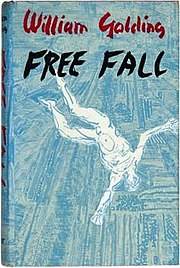
 The majority of the characters presented by William Golding have an objective: survive. Many of them are presented in groups but other ones, as Sammy in Free Fall or Christopher in Pincher Martin, have to survive alone, fighting against their own mind and the tension surrounding them.
In The Lord of the Flies this element is the motif of the characters since they have to organise themselves in order to stay alive in the desert isle. Because of that, the group of children tries to establish rules and create a sort of “adult society” but it doesn’t works at all. They are still children and they often forget their first intentions. Little by little, the concept of survival becomes more and more savage, highlighting the situation of Ralph, who at the end of the novel is seen as a hunted creature.
Our question now is: Why is this theme present in William Golding? Obviously it is closely related to the War frame we have already presented. Surviving a war is a quite difficult thing, but surviving a post-war could be even more difficult. The physical and specially, the psychological pain (as the one Sammy feels in Free Fall) are concepts that easily manipulate the essence of the human being itself.

The first element that we find in common among all these novels is the concept of war. It appears directly, like in The Lord of the Flies, Pincher Martin or Darkness Visible indirectly, like in The Inheritors. William Golding fought in the Second World War and this was reflected in his novels. In The Lord of the Flies, for example, we can clearly distinguish the essence of Hitler in the figure of Jack. His violent behavior and the way in which he treats the other children are evidences of this fascist reflection. In the case of Pincher Martin or Darkness Visible, Golding shows us the consequences of the war: Pincher Martin maybe becomes mad because of the despair of being alone, of having lost everything and Matty, the main protagonist of Darkness Visible, is a direct victim of a bombing attack during The Blitz.
In The Inheritors war is not as direct presented as in the other cited novels. However, it is the way in which the Homo sapiens treat the Neanderthals what reminds us how many countries were considered weaker and were invaded by those which considered themselves superior. Ironically, at the end of the novel, the Homo sapiens run away because they are supposedly afraid of the Neanderthals. This situation reminds us the way in which the first Puritans treated Native Americans when they arrived to the New World.