
The Lord of the Flie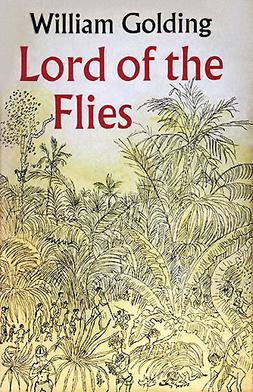 s is a novel written by William Golding published in 1954. It is very interesting to analyse the way in which this author uses this novel as a criticism towards the British government and society after the World War II. Through the book, Golding depicts his own society using a microcosm and placing there a group of children who represent different areas of the society and government. Using their behaviour as well as their condition as children, Golding is able to catch the readers’ attention and made them to think about the real situation that he is describing.
In this paper, we are going to see how the author analyses these different areas and we will try to find out why he does it in this way, taking into account the historical background in which the story was gestated.
Through this analysis, we will discover that, even though at first sight this novel might seem a children’s novel, it is, in fact, a very serious and political weapon against the resulting country England was after the Second World War.
-, NEXT,-
A Midsummer night’s dream: (Visited 01 – 11 – 2010)
– Complete work: http://internetshakespeare.uvic.ca/Library/Texts/MND/Q1/scene/#tln-
– Information about the play: http://internetshakespeare.uvic.ca/Library/SLT/plays/midsummersubj.html
http://en.wikipedia.org/wiki/A_Midsummer_Night%27s_Dream
– Quotations:
Hermia: http://internetshakespeare.uvic.ca/Annex/Texts/MND/Q1/default/#tln-67
Egeus: http://internetshakespeare.uvic.ca/Annex/Texts/MND/Q1/default/#tln-104
Theseus: http://internetshakespeare.uvic.ca/Annex/Texts/MND/Q1/default/#tln-126
– Characters:
Hippolyta: http://en.wikipedia.org/wiki/Hippolyte
Oberon: http://en.wikipedia.org/wiki/Oberon
Titania: http://en.wikipedia.org/wiki/Titania
Elizabethan Era information: (Visited 01 – 11 – 2010)
– Historical background: http://en.wikipedia.org/wiki/Elizabethan_era
– Women in Elizabethan time:
Situation: http://www.elizabethan-era.org.uk/elizabethan-women.htm
Education: http://internetshakespeare.uvic.ca/Library/SLT/ideas/girls.html
http://internetshakespeare.uvic.ca/Library/SLT/ideas/girls+1.html
– Society:
Patriarchal society: http://internetshakespeare.uvic.ca/Library/SLT/ideas/sexes.html
Hierarchy: http://internetshakespeare.uvic.ca/Library/SLT/ideas/sexes.html
Marriage: http://www.william-shakespeare.info/elizabethan-wedding-customs.htm
http://internetshakespeare.uvic.ca/Library/SLT/society/duties.html
References: (Visited 01 – 11 – 2010)
Koci, Katherine; Feminism in a Patriarchal Society: http://uafortsmith.edu/Applause/FeminismInAPatriarchalSociety?skin=text
Elizabethan women: http://www.elizabethi.org/uk/women/
PREVIOUS -.,.- INTRODUCTION
After having read A Midsummer night’s dream and taking into account the background of the time in which the comedy was written, it really surprises us the Shakespeare’s way of presenting both men and women.
The role of men is quite well adapted to the reality since it is the man’s voice which decides and rules everything. However, the fact that a woman’s voice is not only presented but also used as an influential weapon in the comedy makes us to think about the intentions of Shakespeare.
At first sight, this is just a mechanism that the author used to attract the audience’s attention and give the plays its comical sense. Nevertheless, for us, it also means a criticism to the society and the women’s constrains of the time and even a little claim in the favour of women. It is true that during the Elizabethan era, women became a little bit freer. The figure of a powerful queen made the figure of the woman itself a little bit stronger and maybe independent that it had been before. So it is possible that this was what Shakespeare also represented in this comedy: the beginning of a new concept of womanhood which started to wake up through the Elizabethan society.